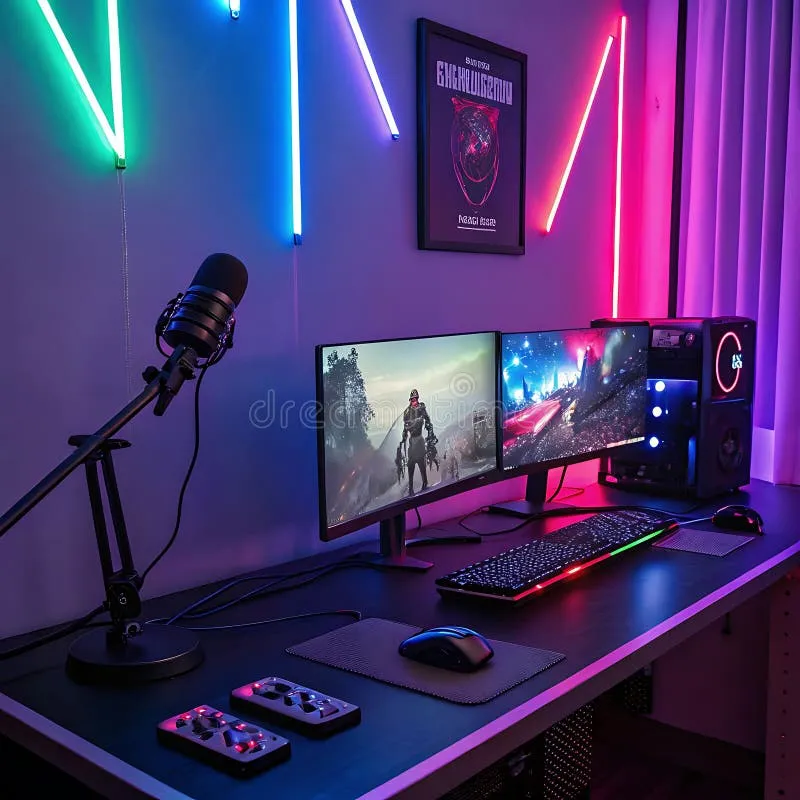
No Passport Required: How Cross-Regional Play Is Rewriting the Rules of Competitive Gaming

Photo: Pkmlq, Public domain, via Wikimedia Commons
Not long ago, competing internationally in esports meant plane tickets, visa paperwork, and hotel rooms in cities most Americans couldn't locate on a map. Today, a kid in Columbus, Ohio can qualify for a South Korean tournament bracket from his bedroom. That shift isn't just logistical — it's cultural, competitive, and reshaping the entire structure of how organized gaming works.
Cross-play and cross-regional competition aren't new concepts, but the infrastructure supporting them has matured dramatically over the last few years. And the ripple effects are being felt everywhere, from how teams are built to how competitive metas evolve.
The Infrastructure That Made It Possible
The backbone of all of this is server technology and matchmaking architecture. Games like Valorant, Rocket League, and League of Legends have invested heavily in regional server clusters that reduce latency across continents to playable — and increasingly, competitive — thresholds.
Ping used to be the great equalizer that made cross-regional competition feel unfair. A player dealing with 180ms lag competing against someone at 20ms isn't a fair fight. But server improvements, combined with better data routing, have brought those numbers down significantly for many matchups. Is it perfect? No. Is it good enough to run legitimate cross-regional qualifiers? Increasingly, yes.
Beyond the technical side, platforms and tournament organizers have also gotten smarter about structuring events to accommodate different time zones, regional qualification paths, and even language barriers in communication tools. The logistical scaffolding has caught up to the ambition.
Regional Qualifiers Are Going Global
One of the more interesting developments in competitive esports over the past two years is the proliferation of open international qualifiers — events where any registered player, regardless of region, can compete for a spot in a larger tournament bracket.
For US players, this has opened doors that didn't exist before. North American competitors are regularly showing up in Southeast Asian qualifier brackets, European ladder events, and Latin American open cups. Some are doing it to scout competition. Others are doing it because their home region's tournament scene doesn't offer enough opportunities at their skill level.
This matters because regional scenes have historically developed distinct competitive cultures. North American players tend to favor aggressive, individual-carry playstyles in many titles — a reflection of a streaming culture that rewards flashy plays. Korean and Japanese communities have long emphasized systematic, team-oriented coordination. European players often sit somewhere in between, with a reputation for tactical flexibility.
When these styles collide in mixed-region brackets, something genuinely interesting happens to the meta.
When Playstyles Collide: The Cultural Meta
Competitive metas — the dominant strategies and character/hero/loadout choices that define a game's high-level play at any given moment — have always been partly regional in nature. Certain strategies catch on in one region and take months to migrate to another. Tournament patches that shift the meta in North America often play out differently in Asia, where the player base's collective response to balance changes tends to be faster and more systematic.
Cross-regional competition is accelerating meta evolution in a way that's hard to overstate. When a team from the Philippines running an unorthodox rotation strategy in a battle royale meets a North American squad built around traditional zone control, both teams are forced to adapt in real time. Those adaptations get studied, clipped, and disseminated across content platforms at lightning speed.
The result? Metas are becoming more globalized, but also more unpredictable. Regional quirks that used to take a full competitive season to spread internationally are now surfacing in major tournaments within weeks.
A competitive analyst who works with several mid-tier North American esports organizations put it bluntly: "The old playbook of 'master the NA meta and you'll be competitive globally' is dead. Teams that don't study international play are showing up to tournaments already behind."
Mixed-Region Rosters: The New Normal?
Another trend worth watching is the rise of intentionally mixed-region rosters. Rather than fielding five players from the same country or region, some organizations are building teams that blend regional strengths — pairing the aggressive individual mechanics of NA players with the disciplined team structure of Korean or European players, for example.
This isn't without friction. Communication across languages and time zones is genuinely hard. Team chemistry takes longer to build when players are scattered across continents. And there are ongoing debates in the esports community about whether mixed rosters dilute regional identity in ways that hurt grassroots scenes.
But the competitive results are hard to argue with. Several mixed-nationality rosters have performed above expectations in international events over the past year, suggesting that the diversity of approach can be a genuine advantage when managed well.
For US players specifically, this creates an interesting opportunity. Being part of a mixed roster can mean exposure to coaching philosophies, practice structures, and competitive preparation methods that simply don't exist in the North American scene yet.
What This Means for the Average Competitive Gamer
If you're a competitive player in the US who isn't already looking at international qualifier ladders, you're leaving experience on the table. Not every cross-regional event is a path to a pro contract — most aren't — but the exposure to different playstyles and the competition reps against globally diverse opponents will make you a better player.
Beyond individual development, the community aspect of cross-regional play is genuinely underrated. Discord servers that started as tournament coordination channels have evolved into ongoing cross-cultural gaming communities. American players are building friendships and rivalries with players in countries they've never visited. That's not a small thing.
Platforms like GA88 Arena exist precisely at this intersection — where the competitive drive meets the social fabric of gaming. As the lines between regional scenes continue to blur, the communities that form around shared competition become increasingly valuable.
The Competitive Landscape Is Bigger Than It's Ever Been
The geographic walls in competitive gaming are not fully down. Latency is still a real issue for certain matchups. Cultural and language barriers still create friction in team environments. Regional prize pools and ecosystem support remain deeply unequal across different parts of the world.
But the direction of travel is unmistakable. Cross-play infrastructure is maturing, international qualifiers are multiplying, and mixed-region competition is producing some of the most interesting competitive dynamics the esports world has seen.
For American players, the message is clear: the competition isn't just across the country anymore. It's across the planet. And that's a pretty exciting problem to have.