When the Game Stops Being Fun: Recognizing and Recovering From Gaming Burnout
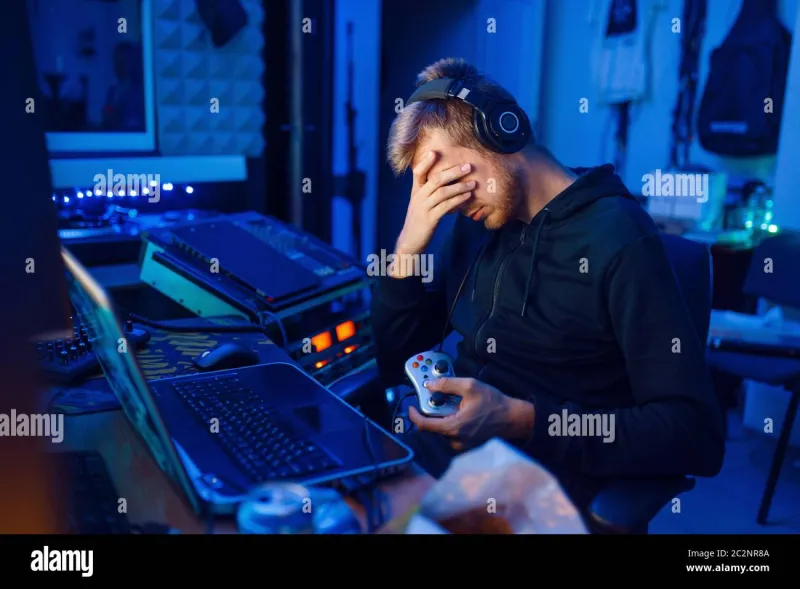
Photo: gamer sitting alone at desk looking exhausted stressed burnout, via c8.alamy.com
There's a specific kind of awful that comes with sitting down to play your favorite game and feeling absolutely nothing. No excitement, no drive — just a hollow obligation to log in because you feel like you have to. If you've been there, you already know what we're talking about. If you haven't, consider this your early warning system.
Gaming burnout is real, and it's hitting players at every level — from weekend warriors grinding ranked to full-time streamers trying to hold their audience together. The culture around competitive gaming tends to glorify the hustle and shame the rest, which makes the whole thing worse. But pretending burnout doesn't exist won't make you better at the game. It'll just make you miserable.
What Burnout Actually Feels Like
Burnout isn't the same as having a bad week or going on a losing streak. It's deeper than that. Sports psychologists describe it as a state of chronic exhaustion that affects motivation, performance, and your overall relationship with the activity you once loved.
For gamers, it tends to show up in recognizable patterns. You start dreading sessions you used to look forward to. Your performance drops not because your mechanics got worse, but because you can't focus or care enough to play at your usual level. You get irritable during games — not competitive-irritable, but genuinely angry and resentful. You might start avoiding your gaming friends or feeling disconnected from your community.
Dr. Mia Stellan, a sports psychologist who works with both traditional athletes and esports competitors, describes it this way: "Burnout in gaming often develops slowly because the warning signs get misread. Players think they just need to push through, play more, grind harder. But that's exactly the wrong response. You're pouring water into a cup that's already overflowing."
The pressure to keep up is real. In a 24/7 gaming ecosystem where someone is always online, always improving, always streaming, stepping back feels like falling behind. That fear keeps a lot of players grinding long past the point where it's doing them any good.
The Grind Culture Problem
Competitive gaming culture has a complicated relationship with rest. Hustle is celebrated. Breaks are treated as weakness. "No days off" gets quoted like it's gospel, and streamers who disappear for a week come back to audiences who've moved on.
This environment creates a specific kind of psychological trap. The more burned out you get, the more you feel like you need to play to catch up — which makes the burnout worse, which makes your performance worse, which makes you feel more behind, and so on. It's a loop that's really hard to break from the inside.
Amateur and professional players alike fall into it. Marcus, a 22-year-old Valorant player from Atlanta who competed in regional circuits, described hitting a wall after eight months of playing six to eight hours a day. "I wasn't even trying to go pro. I just loved competing. But somewhere around month six, I stopped caring about winning. I was logging in because I'd told myself I had to. That's when I knew something was wrong."
He took three weeks off — which felt terrifying at the time — and came back with a clarity he hadn't had in months. His rank actually improved within a few weeks of returning.
Practical Ways to Actually Recover
Here's the part nobody wants to hear: there's no shortcut. Recovery from burnout takes time, and the first step is accepting that stepping away is not the same as quitting.
Set a real break. Not a "I'll play less this week" break. A genuine, defined period where you step away from competitive play. This doesn't mean you can never game — casual sessions with friends are fine — but the pressure-driven grind needs to stop. Even a week or two can make a significant difference.
Reconnect with why you started. Before ranked matches and tournament prep, there was probably a moment when you played just because it was fun. Find your way back to that. Play a game you've never touched competitively. Try a genre you'd normally ignore. Give your brain a different kind of stimulation.
Move your body. This sounds unrelated, but it isn't. Physical activity has a measurable impact on stress, mood, and cognitive function. Even a 20-minute walk breaks the cycle of sitting, staring, and spiraling. Many professional esports organizations now build fitness routines into their players' schedules for exactly this reason.
Talk to someone. Whether that's a friend, a teammate, or an actual mental health professional, getting the feelings out of your head and into a conversation helps. The gaming community has historically been bad at this, but that's changing. Burnout is not a personal failure. It's a response to unsustainable conditions.
Restructure your schedule. When you come back, come back differently. Build in rest days the way a traditional athlete would. Set session limits. Separate your streaming obligations from your personal play time if you can. Protect the parts of gaming that are still fun.
The Long Game
Here at GA88 Arena, we're all about competing hard — but we also know that the players who last are the ones who figure out how to be sustainable. The grind is real, the competition is fierce, and the community is always moving. But none of that matters if you've run yourself into the ground.
The best competitive gamers aren't just the most talented. They're the ones who manage their energy, know when to push and when to pull back, and stay connected to the reason they picked up a controller or a mouse in the first place.
Burnout doesn't mean you're done. It means you're human. And recognizing it early is one of the smartest competitive moves you can make.