Home Court Disadvantage: Why Your LAN Performance Doesn't Match Your Bedroom Stats
Photo: No machine-readable author provided. Boivie assumed (based on copyright claims)., Public domain, via Wikimedia Commons
You've run this map a hundred times. You know every angle, every rotation, every pixel of the sightlines. At home, you're clicking heads like it's nothing. Then you show up to a LAN event—maybe a local open, maybe something bigger—and within the first ten minutes, everything feels slightly off. Your timing is a half-beat late. Your crosshair placement isn't where you think it is. You're losing duels you'd win in your sleep.
Welcome to the arena effect. It's not a myth, it's not nerves you just need to "get over," and it's definitely not an excuse. It's a measurable phenomenon rooted in psychology, physiology, and environment—and understanding it is the first step toward actually performing at your ceiling when the stakes are real.
The Familiar Environment Trap
Here's something most players don't think about: your brain is deeply wired to your home setup. Over hundreds or thousands of hours, your nervous system has essentially calibrated itself to a specific desk height, monitor distance, ambient lighting level, and audio profile. Your muscle memory didn't just learn the game—it learned the game in that specific context.
Sports psychologists call this context-dependent memory. Your recall and your physical execution are partly tied to the environment where you built those skills. When that environment changes dramatically—like when you swap your bedroom for a tournament venue with bright overhead lighting, unfamiliar peripherals, and two hundred people making noise behind you—your brain is suddenly running the same skills in a different context. The wiring doesn't transfer perfectly.
This isn't a weakness unique to gamers. Athletes deal with it too. There's a reason home-field advantage is a real statistical phenomenon in sports. Comfort and familiarity lower cognitive load, which frees up mental bandwidth for execution. Unfamiliarity does the opposite.
Lighting, Audio, and the Sensory Overload Problem
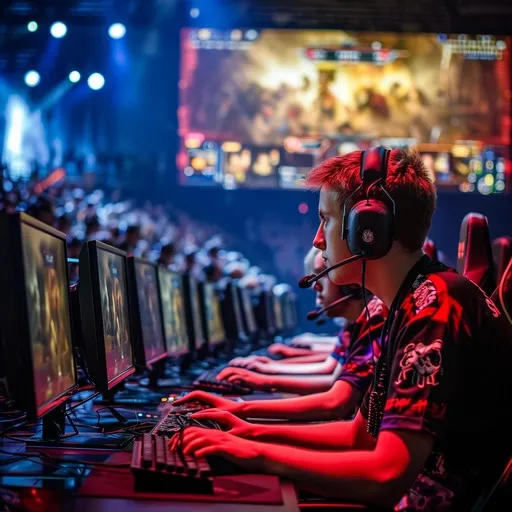
LAN venues are sensory chaos compared to most home setups. The lighting is usually brighter and more diffuse, which affects how your monitor looks—colors shift, contrast feels different, and your eyes work harder to track movement on screen. If you're used to gaming in a dimly lit room where your monitor's brightness is dialed in perfectly, stepping under venue lighting is like switching from your custom settings to factory defaults.
Audio is just as disruptive. At home, you've got your headset doing exactly what you want it to do. At a LAN, you're potentially dealing with crowd noise bleeding through your cans, PA system announcements, the hum of dozens of PCs, and the general ambient roar of a live event. Even if you're wearing the same headset, the input your brain is processing is radically different. Spatial awareness in games like CS2, Valorant, or any tactical shooter is heavily sound-dependent. Compromise that, and your game sense takes a hit.
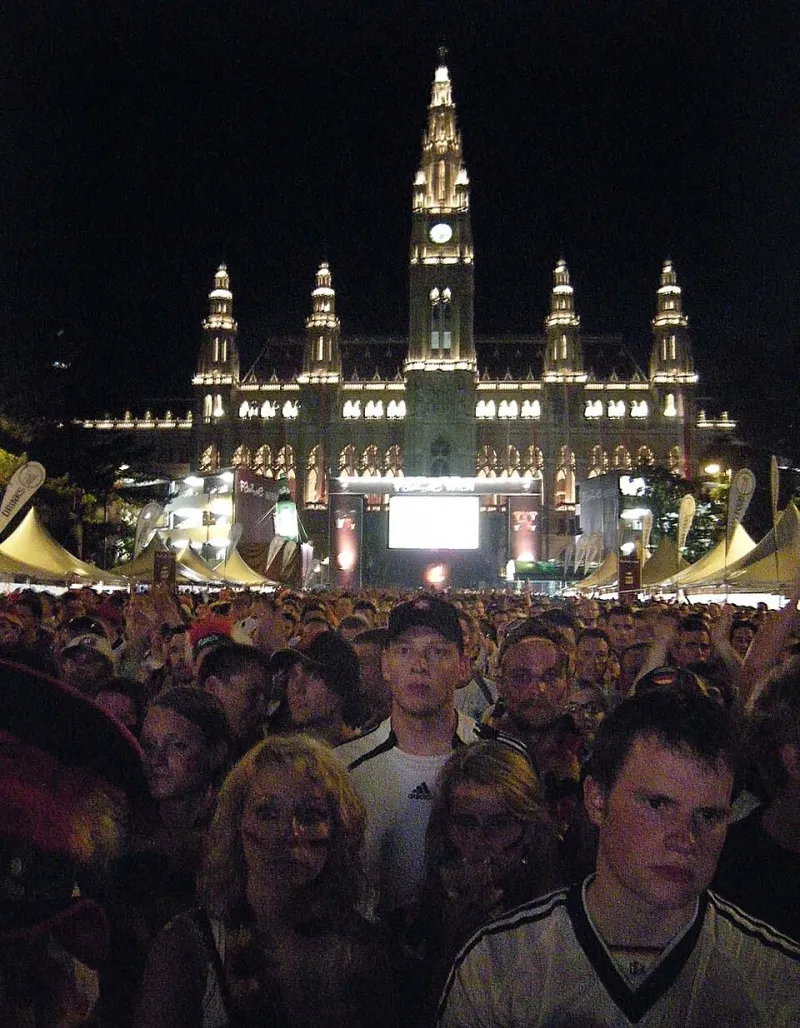
Then there's the crowd. For some players, crowd energy is fuel. For others—especially those who haven't played many live events—it's a cognitive tax. Knowing people are watching activates performance anxiety in ways that solo queuing never does. Your prefrontal cortex, which handles decision-making and impulse control, starts competing with your amygdala, which is running a low-grade threat response. The result? Slower decisions, second-guessing calls you'd normally make on autopilot, and the kind of mechanical slippage that feels inexplicable in the moment.
Equipment Familiarity and the Peripheral Problem
Most LAN events provide standardized setups—specific monitors, mice, keyboards, and mousepads. Unless you're playing at the level where you bring your own gear, you're adapting on the fly. And adaptation takes cognitive resources.
A mouse that's even slightly heavier or lighter than yours changes how you flick and track. A mousepad with different texture affects your stopping power. A monitor with a different response time or refresh rate subtly changes how motion looks. None of these feel like big deals on paper. Collectively, they're enough to shift your performance by a meaningful margin—especially in high-precision games where the margins are already razor-thin.
Strategies That Actually Help
The good news: this performance gap is trainable. You can deliberately condition yourself to perform under unfamiliar conditions, and the process isn't complicated—it just requires intentionality.
Simulate the stress, not just the game. Play your practice sessions with more environmental variation. Change your room lighting. Open a window for noise. Move your monitor a few inches. None of these are perfect replications of a LAN, but they teach your brain that performance isn't locked to one specific context. Variability in practice builds robustness.
Build pre-performance routines. Elite athletes use pre-game rituals specifically because they create a consistent internal state regardless of the external environment. The routine becomes the anchor. Whether it's a specific warmup drill sequence, a playlist, a breathing exercise, or a combination of all three, having a ritual you execute the same way every time helps your nervous system shift into performance mode on command.
Get to venues early and explore. If you can get hands-on time with the equipment and the space before competition starts, do it. Even twenty minutes of casual play on the event setup lets your brain begin recalibrating. You're not going to fully adapt, but you can take the edge off the unfamiliarity.
Practice under observation. Stream your sessions, even if nobody's watching. Set up a camera. Ask a friend to sit behind you while you play ranked. The goal is to normalize the feeling of being observed so it stops registering as a threat. Over time, your performance anxiety response dampens.
Don't change your in-game settings at the event. This sounds obvious, but players do it constantly. They arrive at a LAN and start tweaking sensitivity, resolution, and keybinds to compensate for the unfamiliar hardware. Now they're playing on unfamiliar hardware and unfamiliar settings. Pick a sensitivity and commit to it everywhere. Consistency is more valuable than optimization when you're already under stress.
The Bigger Picture
The arena effect is ultimately a reminder that competitive gaming isn't just a mechanical skill—it's a performance skill. The players who thrive at LAN events aren't necessarily the ones with the highest ranked stats at home. They're the ones who've done the work to make their performance portable, to detach their execution from any single environment, and to stay grounded when everything around them is louder, brighter, and higher stakes than usual.
At GA88 Arena, we talk a lot about competing harder. But competing harder at a LAN starts with understanding why the arena feels different—and building the kind of mental and environmental flexibility that lets you bring your real game no matter where you're sitting.
The bedroom is where you build it. The arena is where you prove it. Make sure those two places are talking to each other.