Follow the Money: The Real Annual Cost of Competing in 2025 (And What's Actually Worth It)
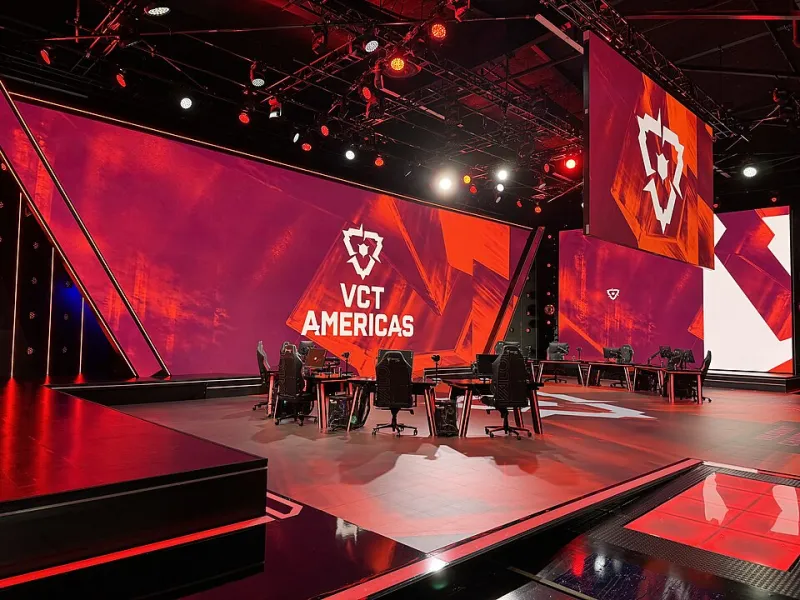
Photo: DJTechYT, CC BY-SA 4.0, via Wikimedia Commons
Ask a competitive gamer what their hobby costs and you'll usually get the price of the game. Ask their bank account, and you'll get a very different number.
Between tournament entries, platform subscriptions, event travel, coaching, and the siren song of new gear, the true cost of climbing the competitive ladder in 2025 can run anywhere from a few hundred dollars a year to more than a semester of community college. We pulled together realistic figures across three player tiers, then made some calls about what's worth it — because not every dollar spent on gaming is spent on getting better.
Tier 1: The Console-Casual Competitor (~$300–$600/year)
This is ranked-play-on-the-couch territory: Game Pass or PS Plus (~$60–180/year), a game or two annually ($70 each), a decent controller that doesn't drift ($60–200), and maybe an online tournament or two with $10–25 entry fees.
Verdict: This tier is nearly all value. The subscription is the price of admission, the controller is a legitimate tool, and low-stakes online events are the cheapest competitive education available. If someone in this tier is spending more, they're usually buying skin bundles, not skill — and that's fine, just be honest that it's fashion, not training.
Tier 2: The Aspiring Grinder (~$1,200–$2,500/year)
Now we're talking PC or serious console play with real competitive intent. The stack looks like this:
- Hardware amortization: a competitive-grade setup spread over three years (~$500–900/year)
- Entry fees: monthly online tournaments and league passes (~$200–400)
- Subscriptions: aim trainers, stat trackers, coaching platforms (~$150–300)
- Coaching: even occasional 1-on-1 sessions at $25–50/hour (~$300–600)
- Connectivity: fiber internet upgrade, because packet loss is a skill issue your ISP is causing (~$300–600)
Verdict: This is the tier where money and improvement actually correlate — if you spend it right. Coaching and connectivity are the two line items with real returns. Coaching compresses years of trial and error into months, and a stable connection is table stakes nobody should cheap out on.
The trap in this tier? Gear churn. The mouse released this month is 2% lighter than yours. The keyboard has 0.4mm faster actuation. Unless you're at the very top of the ladder, the difference between your current setup and the new one is noise. We've said it before: your GPU isn't the problem. Your spending pattern might be.
Tier 3: The Regional Tournament Regular (~$4,000–$8,000/year)
Local and regional LANs are where competitive gaming gets expensive fast, because now you're paying for geography:
- Event travel: registration ($40–100/event), gas or flights, hotels at $130+/night in event cities (~$2,000–4,500)
- Food on the road: arena nachos are a lifestyle, not a meal (~$600–1,000)
- Team expenses: shared practice server costs, split coaching, team jerseys (~$300–600)
- Gear: a travel-ready setup, peripherals, backup cables you will absolutely need (~$400–800)
Verdict: Travel is the single biggest cost in competitive gaming, and it's also the hardest to evaluate. Here's our honest take: local events within driving distance are worth every penny for the LAN experience, the networking, and the pressure education. But the $900 flight to a regional you're not ready for is a status purchase wearing a competition costume. Go when your results justify the trip, not when your FOMO does.
Where the Money Actually Works
If we had to rank every expense by return on improvement:
- Coaching — the fastest skill-per-dollar in the game
- Stable internet — invisible until it's missing
- Local tournament entries — pressure is a skill you can only buy with reps
- A reliable, comfortable setup — bought once, kept for years
- Travel to major events — incredible value at the right stage of your development
- Gear upgrades mid-cycle — the definition of diminishing returns
- Cosmetics and battle passes — zero skill value, non-zero joy value, know the difference
The Bottom Line
Competitive gaming in 2025 is a real financial commitment, and pretending otherwise is how players end up tilted and broke — a phenomenon we've covered before and that hasn't gotten any cheaper. The players who last aren't the ones who spend the most. They're the ones who spend deliberately: invest in coaching and competition, resist the gear treadmill, and save the big travel money for the moment your results earn it.
Game on. Wallet informed.