Smarter, Not Faster: How Game Sense Is the Real Competitive Edge
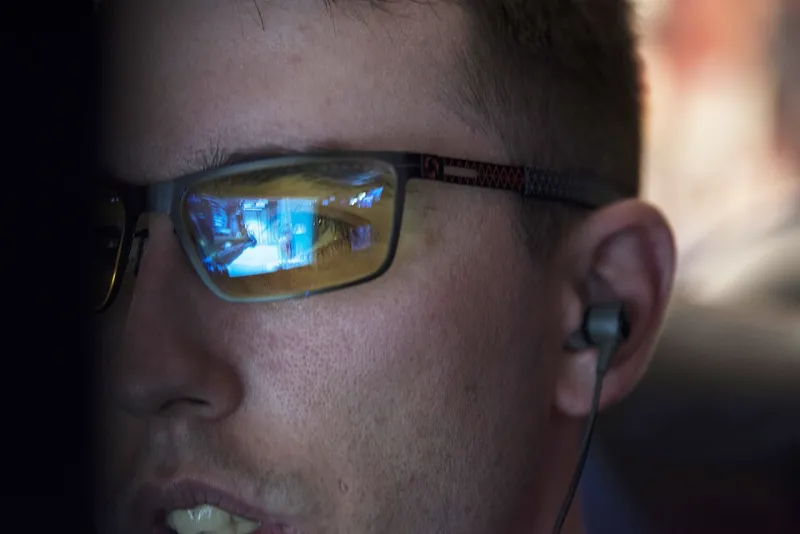
Photo: U.S. Air Force photo by Airman William Tracy, Public domain, via Wikimedia Commons
Every gamer has heard some version of the same brag: "My reaction time is 180 milliseconds. What's yours?" Reaction time is the flashiest stat in competitive gaming, the one that gets clipped, posted, and debated on Reddit threads at 2 AM. But spend five minutes talking to a pro coach, and they'll tell you something that might genuinely surprise you—raw reflexes are closer to the floor than the ceiling.
The players consistently winning at the highest levels of games like Valorant, League of Legends, CS2, and Apex Legends aren't just moving faster than everyone else. They're thinking several steps ahead. That's game sense, and it's arguably the most underrated skill in competitive gaming today.
What Game Sense Actually Means
Game sense is one of those terms that gets thrown around a lot without anyone fully explaining it. At its core, it's the ability to build and maintain an accurate mental model of what's happening in a match—even when you can't directly see it.
In a shooter like CS2, game sense means knowing where the enemy AWPer is likely to be repositioning based on the sounds you heard thirty seconds ago. In League of Legends, it's understanding that the enemy jungler hasn't shown on the map in ninety seconds and adjusting your lane aggression accordingly. In Apex, it's reading the final circle collapse and recognizing that two squads are about to collide on your left flank before either of them pulls the trigger.
None of that requires a sub-200ms reaction time. It requires pattern recognition, map awareness, and the mental discipline to process information under pressure. Those are learnable, trainable skills—and that's actually great news for the majority of competitive players.
The Age Factor Nobody Talks About
Here's something worth sitting with: the average age of peak mechanical performance in esports is somewhere around 22–24 years old, according to various sports science studies tracking professional players. Reaction time genuinely does slow as you get older. And yet, veteran players routinely outlast, outperform, and outcoach younger opponents with theoretically faster hands.
Look at careers like those of Christopher "GeT_RiGhT" Alesund in CS or veteran supports across multiple League seasons who continued performing well past the point where their raw mechanics should have declined. Coaches and analysts in the esports space have a term for what keeps these players relevant: "reading the game."
Coaches at the collegiate and semi-pro level often describe it this way: a player with great mechanics and no game sense is like a race car with no GPS. They go fast in the wrong direction. A player with strong game sense might not have the fastest car, but they're always in the right lane.
Predictive Positioning: The Skill You Can Start Building Today
One of the most concrete expressions of game sense is predictive positioning—putting yourself in the right spot before the action starts, rather than reacting to it after. This is where game sense directly neutralizes reaction time as a differentiator.
If you already know where the enemy is going to push, you don't need lightning-fast reflexes to win the duel. You've pre-aimed the angle. You've pre-loaded the crosshair. The reaction is almost irrelevant because the decision was made earlier.
Practical tip: Start reviewing your own VODs specifically looking for moments where you were caught off guard. Ask yourself—was there information available earlier in that clip that should have told you this was coming? Nine times out of ten, there was. The mini-map flashed. A teammate called something. An ability was used that telegraphed a rotation. Training yourself to consume that information in real time is the foundation of game sense.
Map Awareness as a Competitive Weapon
If you're not glancing at the mini-map every few seconds in a match, you're playing with a blindfold on. This sounds basic, but the difference between how often high-elo and low-elo players check the map is genuinely staggering when you analyze gameplay footage side by side.
Top players aren't just checking the map—they're building probability trees from what they see. If three enemies are shown top lane and the jungler hasn't been spotted, there's a very high chance that jungler is about to show up somewhere unexpected. High game sense players have already adjusted. Lower-ranked players find out the hard way.
In tournament play, entire strategies are built around information denial and map control precisely because teams know that starving the enemy of map awareness is one of the most effective ways to neutralize even mechanically superior opponents. It's not a coincidence—it's a direct acknowledgment that game sense wins games.
Building Game Sense Faster Than Grinding Mechanics
Here's the honest truth about mechanical grinding: it's slow, it's repetitive, and the ceiling is largely determined by your hardware (biological and digital). Game sense training, by contrast, compounds quickly because it's essentially pattern recognition, and human brains are built for that.
A few methods that actually work:
Watch pro play with intent. Don't just spectate for entertainment. Pause the broadcast before a big play happens and ask yourself what you would do in that position. Then watch what the pro does. The gap between those two answers is your game sense deficit—and it shrinks every time you run the exercise.
Study the meta, not just your role. Understanding what every class, character, or role is supposed to be doing in any given moment gives you a complete picture of the game that pure mechanical practice never will.
Play slower on purpose. Counterintuitive, but deliberately slowing your decision-making in lower-stakes matches forces you to consciously process information you'd normally react to on autopilot. Over time, that conscious processing becomes instinctive.
Communicate out loud. Whether you're streaming, in a Discord call, or just talking to yourself, narrating what you see forces you to process the game state in full sentences. It sounds ridiculous, but it's one of the fastest ways to identify blind spots in your awareness.
The Bottom Line
Reaction time is a real skill, and nobody's here to tell you it doesn't matter. But if you're stacking your entire competitive development on the hope that your hands are faster than everyone else's, you're building on a foundation that has a hard expiration date.
Game sense doesn't expire. It compounds. And in a competitive landscape where the ceiling keeps rising, the players who invest in reading the game—not just playing it—are the ones still standing in the later rounds.
The arena rewards the smart as much as the swift. Start training accordingly.