Stream Sickness: Why Watching the Pros Might Actually Be Holding You Back
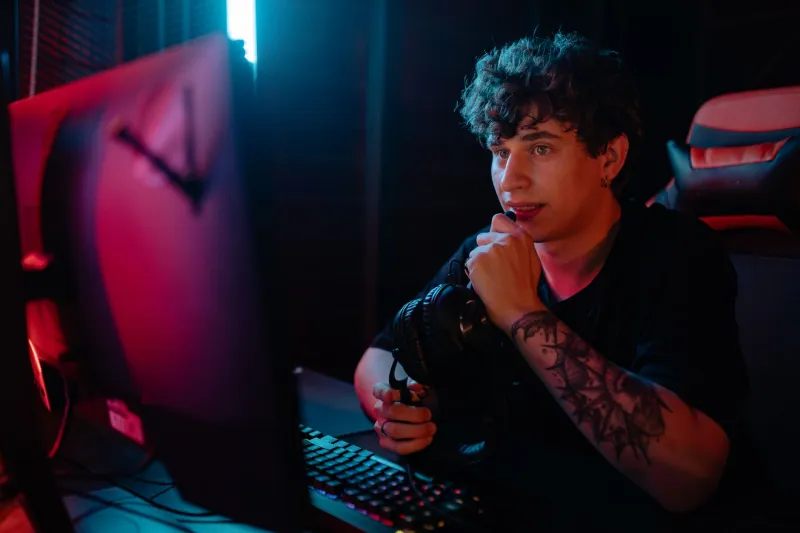
Let's be honest. You've spent a Saturday morning watching a top-ranked player absolutely demolish a lobby, picked up your controller or mouse thirty minutes later, tried the exact same move, and completely faceplanted. Then you did it again. And again. And somewhere between attempt three and attempt twelve, the frustration started creeping in — not just at the game, but at yourself.
You're not alone. Millions of players across the US are caught in the same loop: consume content, feel inspired, perform worse, repeat. It's got a name here at GA88 Arena — we're calling it stream sickness — and it's one of the sneakiest performance killers in casual and mid-level competitive gaming right now.
The Highlight Reel Problem
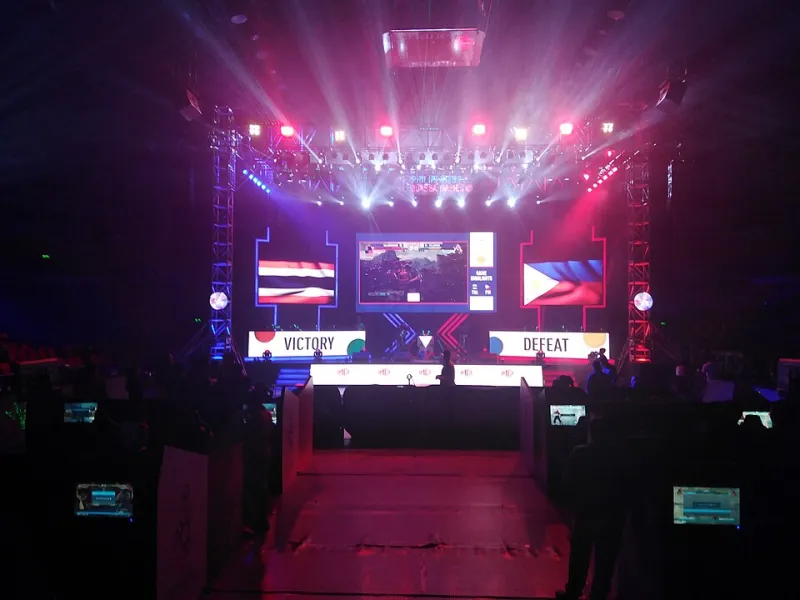
Here's the thing about watching streamers and pro players: what you're seeing is almost never representative of reality. Platforms like Twitch and YouTube are built around engagement, which means the clips that spread, the moments that get clipped, the plays that rack up views — they're the outliers. The one-in-fifty clutch. The read that defied logic. The mechanical execution that took years of repetition to pull off.
Your brain, though, doesn't process it that way. Repeated exposure to elite highlights rewires your sense of what "normal" gameplay looks like. Suddenly, winning a round without a flashy play feels boring. Playing it safe feels wrong. And making the statistically correct, boring decision feels like you're doing it wrong — even when it's exactly right.
Psychologists call this a reference point shift. You're recalibrating your internal benchmark upward, but your actual skill level hasn't moved. The gap between expectation and performance widens, and that gap is where frustration lives.
Mimicry Without Context Is a Trap
There's a specific kind of bad habit that comes from watching streams passively, and it's one of the most common things holding casual players back: copying the what without understanding the why.
You see a pro player push aggressively at a moment that looks random. You try it in your next match. It goes badly. What you missed: that player had information you didn't see on screen — sound cues, a read based on fifty hours of experience against that specific playstyle, or a calculated gamble they could afford to take because of their team's positioning. Their decision wasn't reckless. It was layered. You just didn't have the context to see the layers.
Mimicking surface-level behavior without understanding the decision-making underneath it is like watching a chef add a mystery ingredient and assuming it works in every dish. Sometimes it does. Usually it doesn't. And if you don't know what the ingredient actually does, you'll never know when to use it.
The Comparison Spiral
Beyond habits, there's a psychological toll that doesn't get talked about enough in gaming communities. Constant exposure to elite performance creates a comparison loop that's genuinely damaging to how you experience the game.
You're playing ranked, you have a decent round, and instead of feeling good about it, your brain immediately pulls up the mental highlight reel of whatever streamer you watched that morning. Your "decent round" suddenly looks mediocre. Your improvement goes unacknowledged because the only benchmark in your head is someone who plays for a living, eight or more hours a day, with a coaching staff and team infrastructure behind them.
This isn't just a confidence issue — it actively interferes with learning. Positive reinforcement is one of the core mechanisms of skill development. When you stop recognizing your own progress, you stop reinforcing the behaviors that are actually working. The spiral tightens.
How to Watch Smarter (Without Quitting the Content)
Nobody's saying delete Twitch. That's not realistic, and frankly, gaming content is genuinely entertaining. The goal isn't to stop watching — it's to watch with intention. Here's how to make the content work for you instead of against you.
Pick one thing to study per session. Before you open a stream or pull up a VOD, decide what you're looking for. Positioning in late-game scenarios. How a specific character is being used in a matchup you struggle against. How a player manages resources under pressure. One focus keeps you analytical instead of just entertained.
Watch players closer to your level, too. High-level content is useful, but don't sleep on watching players who are one or two tiers above you — not twenty. Their decision-making is more immediately applicable. Their mistakes are more instructive. Platforms like Twitch make it easy to find streamers across a wide range of skill levels. Use that.
Pause and predict. This is one of the most underrated learning tools available to anyone watching gameplay content. Before a decision gets made on screen, pause and think about what you would do. Then watch what happens. The gap between your read and the pro's read — and the reason for that gap — is where actual learning happens.
Separate entertainment watching from study watching. It's completely fine to throw on a stream in the background while you're eating or chilling. Just don't count that as "studying the game." Passive consumption and active analysis are two completely different activities. Treat them that way.
Follow up with immediate application. If you watch thirty minutes of focused content, jump into a game right after and actively try to apply what you observed. Don't let too much time pass. The connection between observation and practice needs to be tight for it to stick.
Give Yourself Credit for Where You Actually Are
One last thing, and this one's less tactical and more human: you're allowed to enjoy your own gameplay. Competitive gaming at every level has something worth appreciating — the clutch you pulled off in a pub match, the callout that actually worked, the moment where your team synced up without saying a word. Those moments are real, and they matter.
The pros you watch started somewhere. Most of them have talked openly about how long it took to build the skills that now look effortless on stream. The highlight reel version of their career didn't exist for a long time — and even now, it's a fraction of the hours they put in.
At GA88 Arena, we're big on competing harder and playing smarter. But competing harder doesn't mean holding yourself to a standard that isn't yours yet. It means pushing your ceiling, not someone else's floor.
Watch the streams. Love the content. Just don't let the highlight reel become the enemy of your own progress.