Mind Over Mouse: Why the Best Competitive Gamers Are Training Their Brains, Not Just Their Aim

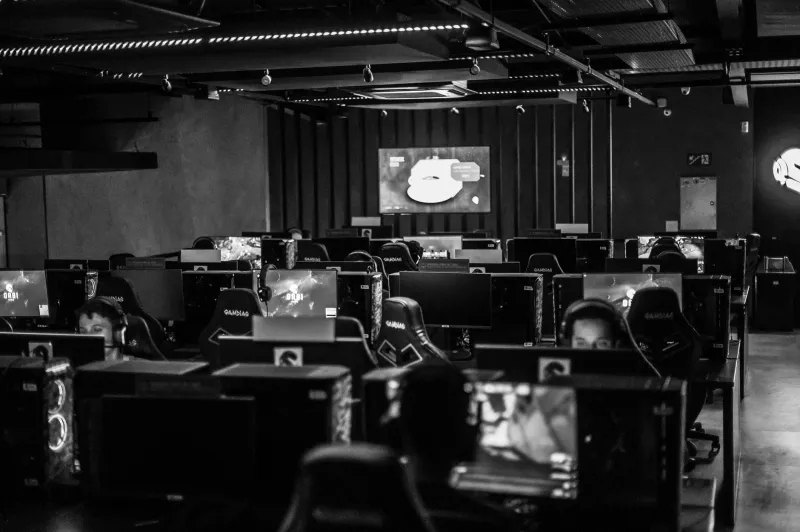
Photo: competitive gamer focused concentration headphones tournament, via thumbs.dreamstime.com
Picture this: You've drilled your mechanics for hundreds of hours. Your crosshair placement is crisp, your macro is solid, and your setup is dialed in. But the moment you queue into a high-stakes match — whether it's a tournament bracket or a ranked climb that actually matters — your hands go cold, your decision-making slows down, and you play like a completely different person.
Sound familiar? You're not alone, and more importantly, you're not broken. What you're experiencing has a name, a scientific explanation, and — here's the part that matters — a solution.
Sports psychology, long a staple of NFL training camps and Olympic prep programs, has officially arrived in competitive gaming. And the teams and solo players who are taking it seriously are seeing real results.
What Choking Actually Is (And Why Your Brain Betrays You)
Let's start with the science, because it's genuinely fascinating. When athletes — including gamers — "choke" under pressure, it's not weakness or lack of preparation. It's a neurological event. Researchers call it "explicit monitoring," which basically means your brain starts micromanaging skills that should be running on autopilot.
Think about how you walk. You don't consciously think about each step. But if someone says "pay attention to exactly how you're lifting your foot right now," suddenly walking feels weird and mechanical. That's what happens to a high-level Valorant or Street Fighter player in a pressure moment. The conscious brain hijacks processes that were working just fine on their own.
Sports psychologists refer to this as "paralysis by analysis," and it's one of the primary things mental performance coaches are now helping esports athletes overcome.
How the Pros Are Training Their Mental Game
Organizations like Team Liquid and Cloud9 have brought mental performance staff into their infrastructure, and the approach mirrors what you'd find in traditional professional sports. The core pillars tend to look something like this:
Visualization and mental rehearsal. Before a match even starts, elite players are running through scenarios in their heads — not daydreaming about winning, but specifically rehearsing decision trees and responses. A League of Legends jungler might mentally walk through three different early-game pathing options and how they'd react to each. This kind of structured mental rehearsal builds neural pathways that activate under pressure just like physical practice does.
Pre-match routines. You've seen NBA players do the same warmup ritual before every free throw. Competitive gamers are adopting the same principle. A consistent pre-match routine — whether it's a specific warm-up playlist, a breathing sequence, or even a physical stretch — signals to your nervous system that it's time to perform. It reduces the cognitive noise that leads to choking.
Pressure inoculation. This one's interesting. Coaches deliberately create high-stress practice scenarios — scrimmages where one team is spotted a deficit, timed drills with consequences, or situations that simulate the emotional weight of a finals match. The goal is to make the real thing feel familiar. Stress you've encountered before is stress you can manage.
The Breathing Thing Is Real, and You Should Stop Rolling Your Eyes at It
Look, when someone tells a gamer to "just breathe," the eye-roll is understandable. But the physiological reality is hard to argue with. Controlled breathing — specifically the kind that activates the parasympathetic nervous system — directly lowers cortisol levels and reduces the physical symptoms of anxiety: racing heart, tense muscles, tunnel vision.
Box breathing (inhale four counts, hold four, exhale four, hold four) takes about two minutes and is used by Navy SEALs, Olympic sprinters, and increasingly, competitive gamers before tournament matches. It's not about being calm — it's about being controlled.
Practical Mental Exercises You Can Start This Week
You don't need a team psychologist on payroll to start benefiting from these principles. Here's where to begin:
Build a pre-session ritual. Pick three things you do in the same order before every competitive session. Could be a five-minute warm-up in aim trainers, a specific playlist, and two minutes of box breathing. Do it every time, even when it feels unnecessary. Especially when it feels unnecessary.
Practice tilt recovery, not tilt avoidance. You're going to tilt. Everyone does. The mental skill isn't avoiding it — it's shortening the recovery window. After a bad round or a frustrating loss, give yourself a physical reset: stand up, shake out your hands, take three slow breaths. Then sit back down with a clean mental slate. This is trainable.
Reframe pressure as information. When you feel nervous before a big match, your brain is tempted to interpret that as a threat signal. Psychologists call this "reappraisal" — consciously relabeling the sensation. Nervousness and excitement have nearly identical physiological signatures. Tell yourself "I'm excited" instead of "I'm nervous," and studies suggest your performance actually improves.
Review, don't ruminate. VOD review is standard for competitive improvement, but there's a mental health component too. Watch your mistakes analytically, not emotionally. Ask "what would I do differently" instead of "why am I so bad." The language you use in self-review shapes how your brain processes failure.
The Bigger Picture
Here's what's becoming increasingly clear at the highest levels of competition: when mechanical skill gaps between top players are razor-thin, mental performance is the differentiator. The player who can make clean decisions in overtime, who doesn't spiral after an early deficit, who performs in match five the same way they performed in match one — that player wins more than their raw mechanics might predict.
At GA88 Arena, we talk a lot about competing harder. But competing harder doesn't always mean grinding more hours. Sometimes it means being smarter about the hours you're already putting in — and recognizing that your brain is just as much a part of your kit as your mouse and monitor.
The mental game isn't soft. It's strategy. And the players who figure that out first have a serious edge over everyone who's still just chasing their mechanics ceiling.