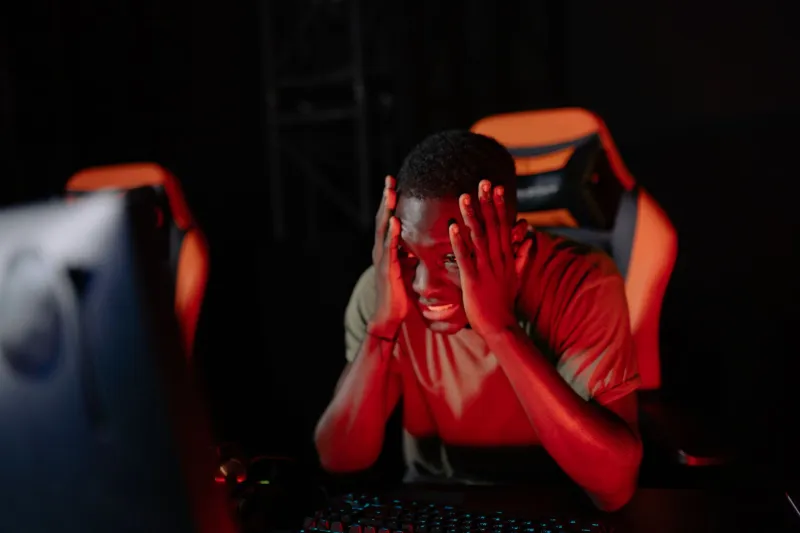
Solo Superstar, Team Liability: The Hidden Cost of Always Being the Best Player in the Lobby

There's a specific kind of high that comes from hard-carrying a game. You know the one. Your team is down, everyone's flaming in chat, and then you just... take over. Forty-percent of the team's damage. MVP screen. Post-game compliments from strangers. It feels like proof — proof that you're good, that you belong, that you've got what it takes.
Except here's the uncomfortable truth nobody really wants to hear: if you're always the one doing the carrying, you might actually be stunting your own growth.
This isn't some motivational poster take. It's a pattern that shows up constantly in competitive gaming communities, from mid-tier ranked queues all the way up to semi-pro circuits. The players who dominate at one skill level often hit a wall when they climb — not because they got worse, but because the style of play that got them there stops working the moment the lobbies get smarter.
What Hard-Carrying Actually Teaches You
When you're the best player in most of your games, you develop a very specific toolkit. You learn to read your angles, manage your cooldowns, and execute your plays. You get really, really good at winning duels, popping off in the right moment, and cleaning up chaos.
What you don't develop — because you never have to — is the ability to win when you're not the star.
Think about it. If you can always outshoot, outmaneuver, or out-macro the average player in your bracket, you never need to rely on your teammates. You don't need to understand rotations from a systems level. You don't need to read macro patterns, predict enemy positioning from a bird's-eye view, or make calls that require trust in people other than yourself. You solve problems by being better than them individually, and it works — right up until it doesn't.
The moment you hit a rank where everyone else is also really good at carrying? Suddenly the whole strategy falls apart.
The 1v9 Ceiling
Here's where the paradox really bites. Players who've built their game around individual carry potential often get to a certain rank and stall out completely. They'll tell you they're hardstuck. They'll blame teammates. They'll post clips showing how they clearly outplayed everyone but still lost.
And sometimes they're not wrong about the clips. They did outplay people. But winning at higher levels of play isn't just about outplaying — it's about outplaying within a system. It's about knowing when to defer, when to enable a teammate who's popping off instead of stealing their momentum, and when the strategically correct move is to play a supporting role even though you could technically go for the flashy play.
Carry-dependent players often have terrible habits around resource allocation. They hoard gold, take contested objectives, and make calls that serve their personal performance over the team's win condition. In lower-ranked games, raw skill compensates for these habits. At higher ranks, those habits become the reason they lose.
Positioning Is the First Thing That Gets Exposed
One of the clearest tells for a player who's been carrying below their actual skill ceiling is positioning. When you're stronger than most opponents, you can afford to be in questionable spots because you'll win the fight anyway. Overextend? Win the 1v2. Bad angle? Out-aim them anyway. Slow rotation? Doesn't matter, you'll clean up the aftermath.
Strong players in stronger lobbies will punish every single one of those habits. And the carry-focused player doesn't even realize those habits exist, because they've never been punished for them before.
Positioning is almost entirely a team-awareness skill. You can't learn proper positioning in a vacuum — it requires understanding where your teammates are, what they need to do next, and how your location either enables or complicates the whole team's options. Players who've always been self-sufficient never develop that spatial awareness because they've never needed to factor other people into their calculations.
The Ego Problem Nobody Talks About
There's also a mental side to this that's worth being honest about. If your identity as a player is built around being the best person in the lobby, what happens psychologically when you're not?
This is more common than people admit. Players who carry consistently start to associate their self-worth with that performance. When they climb into lobbies where they're average — or even below average — the mental game collapses fast. They tilt harder, blame teammates more, and make increasingly desperate plays trying to recreate that carry feeling instead of adapting to the new environment.
Playing well when you're not the star requires a kind of ego flexibility that carry-dependent players simply haven't trained. It's a different skill set entirely, and it doesn't develop automatically just because you're mechanically talented.
How to Actually Break the Pattern
The fix isn't complicated, but it is uncomfortable, which is probably why most players avoid it.
First, start actively practicing games where your explicit goal is to enable someone else to carry. Play a support role, play a utility character, do whatever it takes to put a teammate in a position to pop off instead of you. Notice how the game looks from that angle. Notice what you have to understand about the map, the flow, and the enemy team's patterns in order to do it effectively.
Second, review your losses specifically looking for moments where you made a selfish decision that served your stats but hurt your team's win condition. This is harder than it sounds because those decisions feel correct when you make them. You were the best player — of course you should take that resource, take that fight, make that call. Learning to spot when that logic is actually costing you is the whole game.
Third, and maybe most importantly, get comfortable being average for a while. Climb into lobbies where you genuinely have to work to keep up. The discomfort of not being the carry is exactly where growth happens.
The Players Who Actually Keep Climbing
The competitors who consistently rank up over the long haul aren't always the flashiest players. They're the ones who understand how to win regardless of their personal performance on any given night. They can carry when they need to, but they can also play a quiet, efficient game that keeps the team's win probability high even when nothing is going their way.
That adaptability is what separates players who plateau from players who keep improving. And it's almost impossible to develop if you've spent your whole career solving every problem by being better than everyone else in the lobby.
The carry is addictive. It's one of the best feelings in gaming. But if you're serious about competing at GA88 Arena or anywhere else, the question isn't how many games you can carry — it's whether you can win the games where you don't have to.