Stop Stealing Pro Configs: Why Someone Else's Settings Are Wrecking Your Game

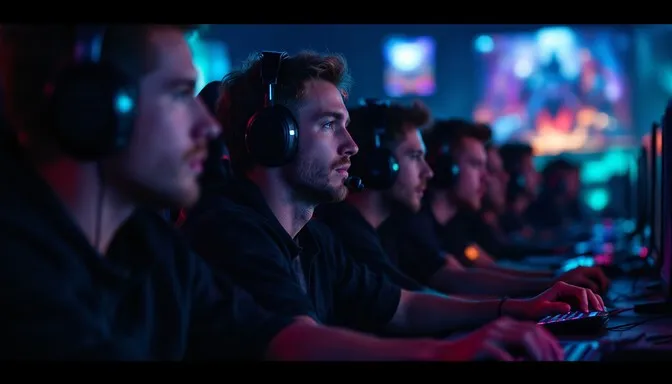
Photo by Photo by ELLA DON on Unsplash on Unsplash
It happens like clockwork. A pro player drops a career-defining performance at a major tournament, and within 48 hours, Reddit threads and Discord servers are flooded with the same question: What are their settings? Sensitivity, DPI, keybinds, resolution, graphics sliders—all of it gets screenshotted, documented, and copy-pasted into thousands of config files across the country.
The logic feels airtight. These players are the best in the world. Their settings clearly work. So why wouldn't you use them?
Because those settings work for them. And you are not them.
The Muscle Memory Problem Nobody Talks About
Here's the part most gaming content skips over: your hands already have opinions. Every hour you've spent gaming has been quietly building a network of motor patterns in your nervous system—what neuroscientists call procedural memory. Your brain has literally rewired itself around the movements you've been making, at the speed you've been making them.
When you suddenly drop your sensitivity from 800 DPI to 400 because Shroud or s1mple uses it, you're not upgrading your settings. You're throwing a wrench into years of calibrated muscle memory. Your aim doesn't magically improve. It gets worse—sometimes dramatically—before it gets better, if it ever gets better at all.
The adjustment period for a major sensitivity change can stretch anywhere from two weeks to several months of consistent play. Most people bail after a few frustrating sessions, conclude the setting "doesn't work," and either go back to their old config or chase the next pro's numbers. It's a cycle that keeps players perpetually uncomfortable and never actually optimized.
Why Pro Settings Exist in the First Place
Professional players didn't open a spreadsheet and calculate the objectively correct sensitivity. They found what worked for their body, their playstyle, and their hardware through thousands of hours of trial and error—often starting as teenagers with no clue what they were doing.
Take low sensitivity, which has become almost mythologized in the FPS community. Yes, many top-tier players use it. But there's a reason for that specific to them: pros play for hours every single day, often on large mousepads with significant arm room. Their accuracy comes from wide, controlled arm movements they've drilled into their body over years. If you're a wrist-aimer who games four hours a week, mimicking that sensitivity isn't enlightened—it's just uncomfortable.
Keybinds tell the same story. A player who started on a specific keyboard layout a decade ago has those bindings burned into reflex. Their crouch key, their ability keys, their push-to-talk—all of it fires automatically without conscious thought. Copying those exact bindings onto your hands, which have their own deeply ingrained patterns, doesn't give you their reflexes. It just makes your reflexes slower while you think about where everything is.
The Graphics Settings Rabbit Hole
Graphics configs are where the cargo cult mentality gets genuinely absurd. Pros often run stripped-down, low-quality graphics for one specific reason: frame rate. At the highest levels of competition, a stable 240+ FPS matters more than shadows and ambient occlusion. Tournament environments run on high-end rigs designed to push raw performance.
But context matters enormously here. If your PC is already running a game at a locked 144 FPS on your settings, dropping everything to minimum isn't going to give you a competitive edge—it's just going to make the game look worse. Meanwhile, some visual settings actually help most players. Turning up model visibility or contrast can make enemies easier to spot, which is arguably more valuable than shaving two frames off your average.
The obsession with pro graphics configs also ignores that many professionals are playing on sponsored hardware with specific monitor setups, custom calibrated displays, and technical support that optimizes every variable. Your setup is different. Your optimal settings will be different too.
How to Actually Find Your Settings
This doesn't have to be guesswork. There's a methodical approach that works better than any config you'll find on a wiki.
Start with what you have. Before changing anything, spend a week tracking your performance at your current settings. Note where your aim breaks down—are you consistently overshooting targets? Undershooting? Struggling with micro-adjustments at close range versus tracking at distance? This gives you a baseline and tells you what direction to move.
Change one variable at a time. This is basic scientific method, and almost nobody does it. If you change your sensitivity, your DPI, and your keybinds simultaneously, you have no idea which change helped or hurt. Pick one thing. Play with it for at least a week. Evaluate. Then move to the next variable.
Use aim training tools intentionally. Apps like Aimlabs and KovaaK's aren't just warm-up routines—they're controlled environments where you can isolate variables. Test your flicking accuracy at different sensitivities. Test your tracking. The data these tools provide is far more useful than any pro's config page.
Trust discomfort, but know when to quit. Any new setting will feel wrong initially. Give changes a genuine runway—a minimum of five to ten hours of focused play—before judging them. But if something feels actively damaging after a real adjustment period, that's useful information too. Not every setting is for every player.
Acknowledge your physical reality. Hand size, grip style, desk setup, chair height—all of these affect what settings will feel natural. A palm gripper and a claw gripper have genuinely different optimal sensitivities. Someone with a cramped desk setup needs different keybinds than someone with a full ergonomic battlestation. Your physical context is part of the equation.
The Bigger Picture
There's something worth naming here that goes beyond settings: the pro-config obsession is often a way of avoiding the harder work of actual improvement. Tweaking a config file feels productive. It's tangible, immediate, and gives you something to point to. Grinding fundamentals, reviewing your own gameplay, and developing game sense are slower and less satisfying in the short term.
The best players at every level—from ranked grinders to weekend warriors—have settings that feel invisible. They're not thinking about their sensitivity mid-fight. Their keybinds fire without conscious thought. That state of flow doesn't come from copying someone else's config. It comes from spending enough time with your settings that they become second nature.
Pros post their configs, and that's fine. Use them as a starting point if you want. But treat them as one data point among many, not as a cheat code. The only setup that's going to actually elevate your game is the one built around how your brain and body actually work—not someone else's.
Your settings. Your muscle memory. Your game.