Watch Yourself Lose: The VOD Review Habit That Turns Stuck Players Into Ranked Climbers

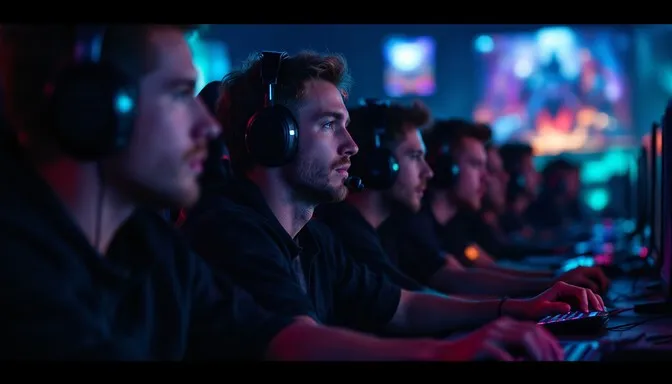
Photo by Photo by Mikhail Pushkarev on Unsplash on Unsplash
The Footage Is Sitting There. You're Not Watching It.
Here's a number worth sitting with: a significant chunk of competitive players on platforms like Twitch and YouTube clip their own gameplay regularly. Way fewer ever go back and actually study it. That gap — between recording and reviewing — is where ranked climbs go to die.
VOD review isn't a new concept. Pro teams have been breaking down film since esports had a pulse. But somewhere along the way, the average competitive player decided that was someone else's job. Maybe it felt too time-consuming. Maybe watching yourself lose feels a little too much like homework. Whatever the reason, skipping it is quietly one of the most expensive habits in competitive gaming.
The good news? You don't need a coaching staff or a three-hour session to make it work. You need a repeatable process and about 20 minutes.
Why Real-Time Self-Awareness Is Basically Useless
Here's the uncomfortable truth about in-game feedback: your brain is terrible at it. When you're actively playing, you're managing inputs, tracking opponents, making split-second calls, and probably dealing with a teammate who's convinced they're always right. There's no bandwidth left for honest self-evaluation.
What fills that gap instead is narrative. You tell yourself a story. The rotation was fine — your teammate just didn't follow up. The positioning was correct — the enemy got lucky. The decision to push was smart — the execution just wasn't there. These aren't lies exactly. They're just the stories a stressed brain tells to stay functional under pressure.
VOD review strips that story away. When you're watching from the outside — no adrenaline, no ego on the line in real time — you see things that were completely invisible in the moment. You notice that you always over-peek after winning a duel. You notice your map awareness drops completely when you're ahead. You notice that the "bad teammate" actually made the right call and you were the one out of position.
That kind of clarity is genuinely hard to get any other way.
The 20-Minute Framework That Actually Works
The reason most players don't review VODs consistently isn't laziness — it's that they don't have a structure. They pull up the footage, watch it kind of passively, feel vaguely bad about a few moments, and close the tab without writing anything down. That's not review. That's just watching yourself play.
Here's a tighter approach:
Minutes 1–3: Set the Context Before You Hit Play
Before you watch a single frame, write down two or three things you already suspect about that session. What felt off? Where did the game slip away? This primes your brain to look for patterns instead of just replaying highlights. It also gives you something to confirm or disprove, which makes the review feel like detective work rather than self-punishment.
Minutes 4–14: Watch With a Single Focus
This is the most important rule: don't try to fix everything at once. Pick one specific category to track — decision-making, positioning, cooldown usage, communication timing, whatever's most relevant to your rank and game. Watch the footage through that single lens only. Flag timestamps when you see that behavior go wrong, and equally important, flag when you do it right. You need both data points.
Ignoring the wins is a common mistake. If you only catalog your errors, you end up with a highlight reel of failure and no model for what success actually looks like in your own gameplay.
Minutes 15–18: Identify the Recurring Moment, Not the One-Off
One bad decision is noise. The same bad decision showing up three times in 40 minutes is a pattern — and patterns are what actually move your rank. Scan your timestamps and look for repetition. If you over-extended twice and got punished both times, that's your note. One sentence. Specific, not vague. "I pushed past the objective when I was ahead and got caught" beats "I made bad decisions when winning."
Minutes 19–20: Write the One Thing
Close your session with a single actionable note. Not a list. One thing you're going to consciously think about in your next session. Keep it somewhere you'll actually see it — a sticky note on your monitor, a note in your phone, a pinned message in your own Discord. The goal is to carry one adjustment into the next game, not to overhaul your entire playstyle overnight.
The Bias You Don't Know You Have
Even with a framework, there's a trap that catches a lot of players doing VOD review: outcome bias. If you won the game, you'll instinctively read your decisions as correct. If you lost, everything looks like a mistake. Neither is accurate.
Try this instead: pause before a decision plays out and ask yourself what the right play was before you see the result. This forces process-level thinking rather than result-level thinking. A bad decision that happened to work out is still a bad decision. A good decision that got punished by RNG or a lucky play from the opponent is still worth logging as correct.
This is actually one of the areas where watching pro VODs alongside your own can help — not to copy their mechanics, but to calibrate your read on what good decision-making looks like in specific game states.
Building the Habit Without Burning Out
You don't need to review every session. That path leads to burnout faster than almost anything else in competitive gaming. Two or three targeted reviews per week is plenty to see real movement over a month. The consistency matters more than the volume.
Some players find it useful to review only losses, which makes sense from a "fix the problems" standpoint. But reviewing a win you nearly threw can be just as valuable — those games often contain your clearest examples of bad habits that didn't get punished yet.
If you're playing on a platform that automatically saves replays — and most competitive titles do at this point — the barrier is even lower. The footage exists. The time investment is minimal. The only thing standing between you and a cleaner read on your own gameplay is the habit of actually pressing play.
The Players Who Climb Aren't Always the Most Talented
At GA88 Arena, we've seen this play out across every game and every skill level. The players who consistently move up aren't always the ones with the fastest reaction times or the most natural game sense. They're the ones who treat improvement like a process rather than a hope.
VOD review is unglamorous. It's not as fun as grinding another ranked game. It won't get you clips. But it will show you the version of yourself that's costing you games — and once you can see that clearly, fixing it becomes a whole lot more straightforward.
Watch yourself lose. Do it on purpose. Do it with a plan. Then go win.