Lights On, Game Face: How to Perform When Everyone's Watching
Photo: Tadeáš Bednarz, CC BY-SA 4.0, via Wikimedia Commons
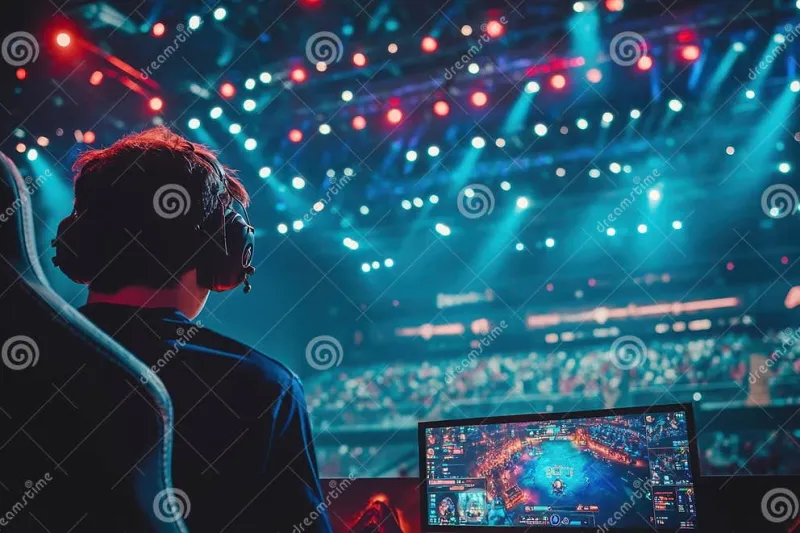
You've run the drill a thousand times in private. Your aim is dialed in, your decision-making is sharp, and your win rate in casual queues would make most players jealous. Then tournament day arrives, you load into your first match with a live chat scrolling and a bracket on the line — and suddenly your hands feel like they belong to someone else.
Welcome to the arena effect.
It's not a myth, it's not a mental weakness, and it's definitely not something that only happens to newer players. Even seasoned competitors at the highest levels of esports talk about the shift in headspace that comes with performing in front of an audience. The difference between those who crumble and those who thrive? They've actually trained for it.
What's Really Happening in Your Brain
Sports psychologists have studied crowd-induced performance changes for decades, and esports is no different from any other competitive discipline when it comes to the underlying mechanics. When you know you're being watched — whether that's a packed LAN venue, a live Twitch stream, or even just a Discord call with your squad spectating — your nervous system kicks into a heightened state of arousal.
For well-practiced skills, this arousal can actually sharpen performance. But for anything that requires conscious, deliberate decision-making — like adapting mid-match to an unfamiliar strategy — that same arousal floods your working memory and causes what researchers call "choking under pressure."
In plain terms: the parts of your game that are deeply automatic tend to hold up. The parts that still require active thought fall apart first.
This is why a player who mechanically outclasses their opponent can still lose a tournament match. Their aim might stay clean, but their macro decision-making — rotations, economy management, team coordination — gets sloppy the moment the stakes go up and the chat starts moving.
The Streaming Effect Is Real Too
Here's something a lot of content creators and tournament hopefuls don't talk about enough: streaming to a live audience creates almost identical psychological conditions to competing in a formal bracket. The pressure is different in flavor but similar in impact.
When you're live, you're aware of being observed. That awareness alone activates a phenomenon psychologists call "evaluation apprehension" — a subconscious concern about how you're being judged. For streamers who are also competitive players, this can actually be a surprisingly useful training tool, provided you approach it intentionally.
Playing ranked matches while live, especially with a chat that reacts to your performance, is one of the closest simulations of tournament pressure that most players have access to without actually entering a tournament. Use it.
How Elite Players Train Specifically for Pressure
If you ask top-level competitors how they prepare for the mental side of competition, very few will tell you they just "play more games." Volume practice builds mechanical skill. Pressure practice builds competitive resilience. Those are two different workouts.
Simulate the conditions, not just the content. Running aim trainers and custom lobbies alone is useful, but it doesn't replicate the psychological load of real stakes. Structured scrimmages with your team, entry-level tournament brackets, and even betting small social stakes on matches with friends all introduce consequence — and consequence is what triggers the pressure response you need to get comfortable with.
Practice your pre-game routine religiously. Most elite competitors have a consistent warm-up sequence they execute before every match, whether it's a five-minute aim routine, a breathing exercise, or a specific playlist. The purpose isn't superstition — it's anchoring. A familiar routine signals to your nervous system that this is controlled, familiar territory, even when everything around you is elevated and unfamiliar.
Debrief, don't just replay. After a high-pressure performance — good or bad — take time to identify which specific decisions degraded under pressure. Was it your positioning? Your communication? Your economy calls? Pinpointing the exact breakdowns tells you where your game is still "conscious" rather than automatic, and that's where to focus your next practice block.
Breathe on purpose. It sounds almost too simple, but controlled breathing (specifically slowing your exhale) has measurable effects on heart rate and cognitive clarity. Some esports organizations now work with performance coaches who teach box breathing and similar techniques specifically for use between rounds or respawn timers. This isn't soft science anymore — it's standard practice at the top.
Converting Practice Wins Into Tournament Wins
The gap between your practice performance and your tournament performance is essentially a measurement of how pressure-adapted you are. The goal isn't to eliminate nerves — nerves are energy, and that energy is useful. The goal is to get comfortable enough with the feeling that it stops hijacking your decision-making.
One of the most practical shifts you can make is reframing what you're actually there to do. Most players enter tournaments thinking about winning or losing. The players who consistently outperform their seeding are almost always focused on executing their process — playing their game, hitting their checkpoints, trusting what they've practiced. The outcome is a byproduct. The process is what you control.
GA88 Arena runs brackets at multiple competitive tiers for exactly this reason. You don't need to be a pro-league hopeful to benefit from structured tournament experience. Getting reps in real competitive environments — with a bracket, stakes, and spectators — is how you close the gap between who you are in practice and who you are when it counts.
The Audience Is a Tool, Not a Threat
Here's the reframe that changes everything for a lot of players: the audience isn't a source of judgment. It's a source of energy. The chat, the bracket, the viewers watching your stream — that's fuel. The players who learn to draw from that energy rather than shrink from it develop a genuine competitive edge that no aim trainer can replicate.
That shift doesn't happen automatically. It happens through deliberate exposure, honest self-assessment, and a willingness to be bad at pressure performance before you get good at it.
The arena is waiting. Might as well learn to love it.